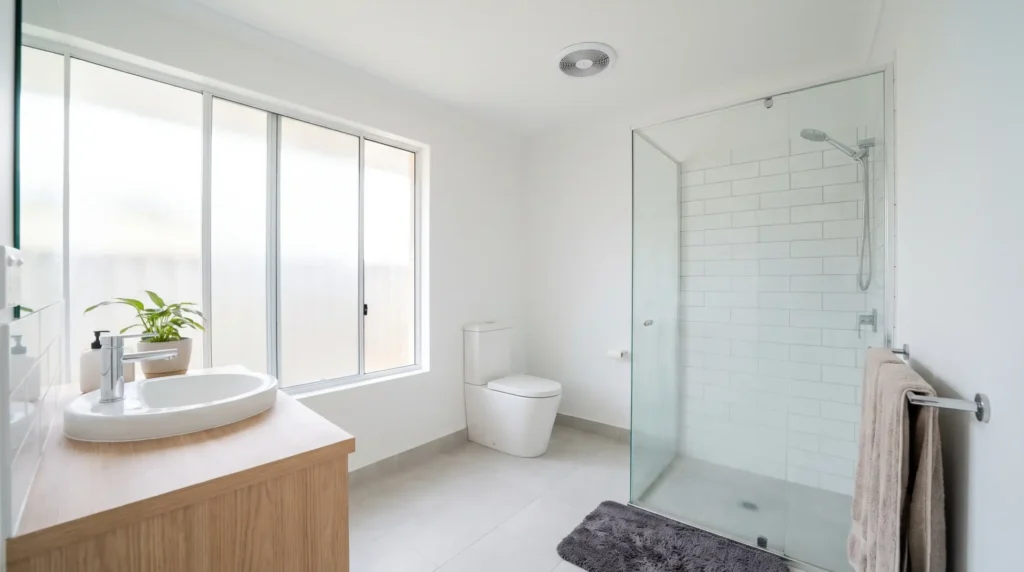
You repainted the bathroom last year, and the ceiling is now coloured black and spotted. Or, footprints left on the wall behind the stove still don’t come off after you wipe. Or, footprints behind the stove still don’t wipe off after you wipe. They’re not just your fault; they’re common.
Every day, paints in kitchens and bathrooms experience splashes, grease, temperature changes, steam, etc. Steam, splashes, grease, or temperature changes hit paints in the kitchen and bathroom on a daily basis. The wrong product gets thrown away quickly. With proper preparation overlaid on the right kitchen paint and bathroom colors, you can have colors that last for years. So what is it we look out for when it comes to Perth jobs suited to surfaces and when “waterproof” warranties need a look over?
Quick answer
- Use kitchen/bathroom paint, rather than wall paint.
- Opt for semi-gloss or satin in wet and splash areas, and low sheen for kitchen walls.
- Use moisture-resistant paint, but it is not sufficient to correct poor ventilation.
- Paint will not repel water. A membrane must be used under the tiles of shower recesses.
- Preparation is more important than what the tin says it is.
Determine the causes and consequences of why kitchens and bathrooms are so hard on paint.
The obvious culprit is steam. Warm, moist air releases moisture onto cooler surfaces such as outside walls and ceilings. The places where mould and peeling begin are inside, where the paint is wet for extended periods.
Kitchens add grease. When cooking, vapor settles as a thin film; this happens not only near the range hood and cooktop, but also new paint won’t stick to a greasy wall.
The climate is deceiving in Perth. Your bathroom is even too moist during the winter months because of the humidity, lack of ventilation, or old homes without a new exhaust vent. Other building materials found commonly in Perth, like cement render, older double brick, and plasterboard, similarly behave uniquely with moisture, and so this has an effect on the appropriate choice of primer.
If you are looking for kitchen and bathroom paint, you should pick the one that will last for a long time.
The majority of big brands offer a series for these rooms. A good kitchen and bathroom paint will likely have a harder, washable film, a mould inhibitor, and a sheen, meaning it will repel moisture. Products are continually changing and do not always adhere to the information given on the front of the tin; the up-to-date technical data sheet should be read.
Moisture Resistant Paint vs “Waterproof Paint”
Moisture resistant paint is designed to withstand steam and splashes without softening, blistering, or staining issues. It is ideal for ceilings and walls of rooms.
Marketing steps on the toes of reality in “Waterproof paint”. Painting is not considered to be a substitute for a waterproofing membrane. The membrane is installed under tiles in shower recesses and in other wet areas and should be installed according to Australian Standards by a qualified waterproofer. We do wall and ceiling painting. No replacement of waterproofing.
Mould resistant paints: What they do and do not work on.
Mould resistant paint has an additive in the dried paint film that inhibits the growth of mould. It doesn’t eradicate mould that exists in the wall, and even the best kitchen and bathroom paint can’t do its duty on a room that never dries out. This is more of a safeguard than a fix.
What kind of Sheen Suits Kitchen and Bathroom Paint?
Area Typical finish Why
Walls in the bathroom space: Semi-gloss or satin. Sheds water and cleans.
Photocopies or prints are allowed on bathroom ceilings with moisture-resistant ceiling paint to help conceal any imperfections and prevent mould growth.
Satin or low-sheen kitchen walls that are easily washed down without harsh glare.
Satin or semi-gloss indicates that it is easiest to clean up grease, and cooktop and splash zones are the parts most prone to food contamination.
Doors, Trims, Cabinets: Semi-gloss enamel, hard-wearing
The greater the gloss, the harder it will be, but the higher the level, the more washes will show on every wall. For older homes with undulating walls in Perth, a satin finish will most likely look better.
These are the things that professionals consider before painting takes place.
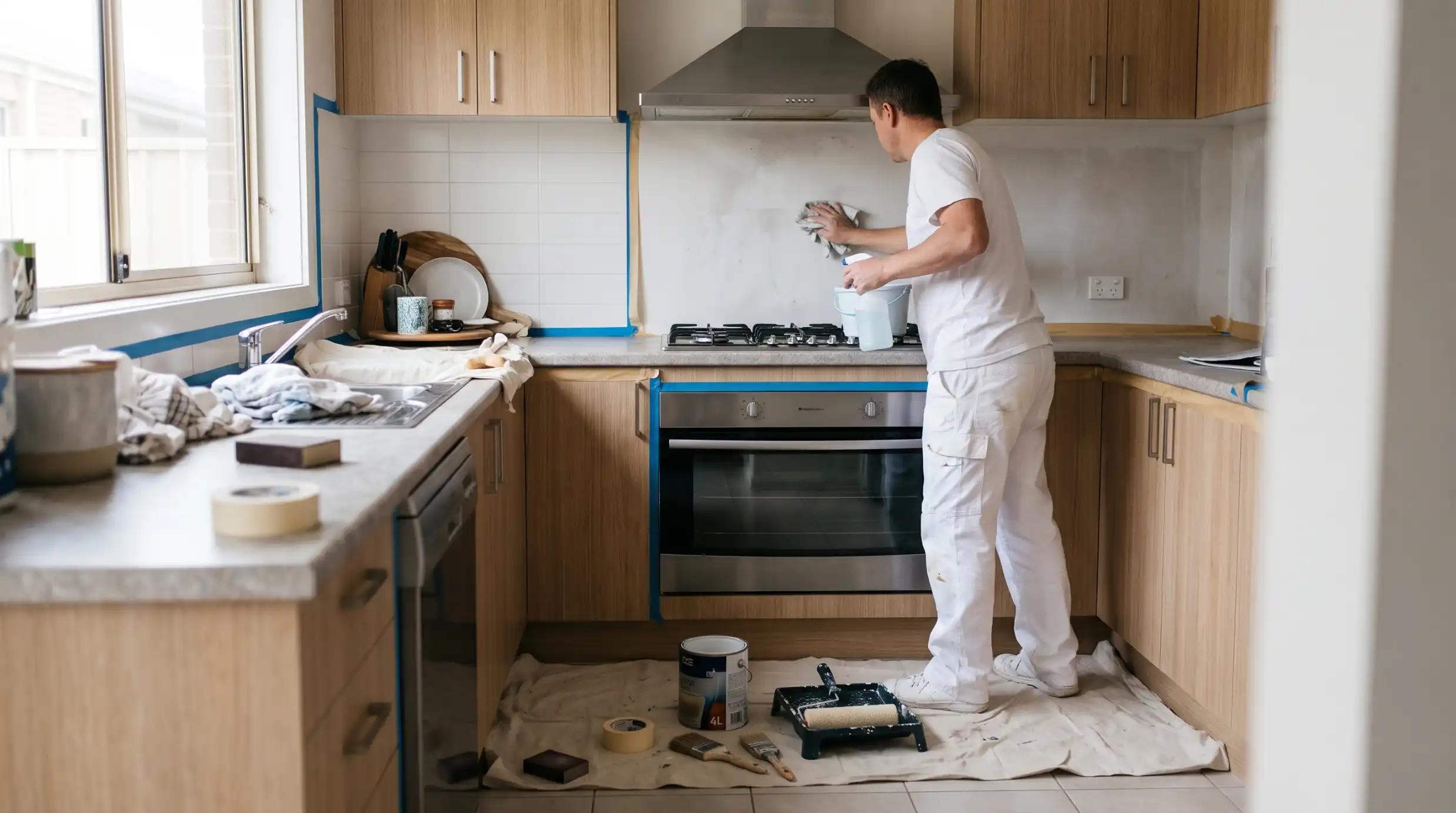
In most jobs, the prep time is longer than the time spent painting. Kitchen and bathroom paint will not adhere to a grease stain or moldy wall, so the following system of work will usually be followed:
- The moisture source. Any type of paint job will be undone by leaking pipes, a failed exhaust fan, or a roof leak.
- Mould. It is treated with the right mould wash, thoroughly rinsed, and then dried. But ‘covering up’ it will only mask it.
- Grease. Cleaning begins with kitchen walls, which are first degreased and then washed.
- The old surface. Slight sanding of glossy paint for nailing onto it.
- Stains and bare areas. A stain-blocking primer is applied first; otherwise, the marks will run through the paint.
- Cracks and gaps. Flex sealant gets around baths, vanities, and basins: paint can’t cover a gap that moves.
- Drying and recoating times. The summers in Perth are dry and still; fast recoating can cause bubbling.
The following are the common mistakes to avoid:
- Installing standard wall paint where kitchen/bathroom paint was needed, due to cost considerations.
- To “cure” a mold/damp problem by painting without addressing the source.
- Avoiding the kitchen degrease.
- Using a flat finish on bathroom walls.
- Painting the shower recess and then assuming that it will keep water out.
- A long, hot soak the day the paint gets put on.
- Ignoring ventilation. Nothing works better for paint than a working exhaust fan.
Budgetary and time restraints.
The cost of the walls depends on the size, accessibility, and amount of repairs required. A typical bathroom redecoration can cost between a few hundred dollars and about $1,000; a kitchen refurbishment can range similarly or be higher, depending on the walls and ceiling. There is a larger task of repainting kitchen cabinets. The bathroom takes 1-2 days and the kitchen 1-3 days plus curing.
The cost of kitchen and bathroom paint may be slightly higher per liter, but it is not a high cost. Labor and preparation are where the money goes.
You will come across the following warning signs when scouting the interior painting Perth-wide quotes you’re considering:
- No preparations and no mould treatment.
- A general quotation of solely one color media product without a specified name of the paint.
- On-site pressure to sign.
- No evidence of LIC or Insurance.
A good painter will happily explain what they will do and why. Get it in writing.
Frequently Asked Questions
What’s the ideal paint color for a bathroom?
A semi-gloss or satin color is best for kitchen and bathroom paint. Check for water resistance and mould inhibitors. Combine sun-bite-resistant paint with adequate preparation and a functional exhaust fan; even the highest quality bathroom paint will have trouble if the bathroom never dries.
How is paint waterproof?
Not like a waterproofing membrane is. Paint that is marketed as “waterproof” is generally splash-proof and resistant to moisture but should not be used to waterproof wet places such as shower recesses. They require an appropriate membrane beneath their tiles, designed to Australian standards. Don’t paint walls and ceilings as a shower seal.
Is it possible to apply a fresh coat of paint over mould in the bathroom?
Not safely. Although painting over mould may temporarily mask the problem, it typically comes back through the paint. Use a mould spray to treat and clean the area, rinse and allow it to dry completely, then repair the moisture source. Following this, it may help to prevent its return using a mold-resistant paint.
How many days do you have to wait before showering after painting?
The drying and curing times are different for each product, so be sure to consult the label. Paint is usually dry to the touch several hours after the end of application time, but it takes several days to weeks to fully cure. Maintain adequate ventilation of the room, and try to avoid long, hot showers for 1 or 2 days, if at all possible.
What is the price of decorating a bathroom or kitchen in Perth?
Running from a couple of hundred dollars on a small bathroom to more than a thousand on a larger bathroom with a size kitchen, surface preparation, etc., it will cost more to have its cabinet painted. Naturally, written, itemized quotes make it very clear what is covered, and this way you can make a fair comparison between painters.
Conclusion
The ideal combination of kitchen and bathroom paint, the correct sheen and preparation, and clearing up grease, mould, and moisture are the three elements that bring the best results. Have them correct, and walls will withstand steam and splatters for a year or more.
City Painters WA would be delighted to inspect, discuss finishes and colors, and provide a written and free quote without any obligations for your Perth home, if you are thinking about repainting.