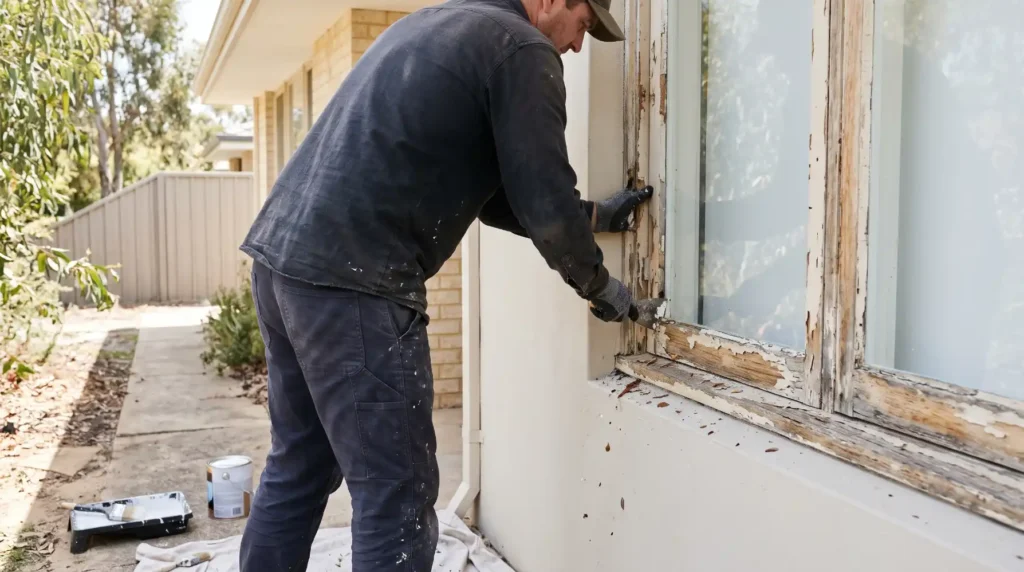
In the spring, you are repainting the back patio area. The following summer, curls of paint are sitting on the pavers. One of the most frequent issues we come across with Perth houses is peeling paint, and it’s hardly a coincidence.
If the paint has bubbles on a north-facing wall, peeling paint in the bathroom, or paint flaking off the window frame, then you are communicating to the paint that what is below is wrong. If it’s time to fix peeling paint, determine what’s causing the problem, and you can do so correctly instead of painting over the same wall every couple of years.
Quick answer
In all but the rarest of cases, paint peeling is caused by one of four factors: moisture behind the paint, poor surface preparation, harsh sun and heat, or the use of the wrong paint for the surface. Scrape back to sound paint, correct the cause of the issue, and then prime and paint. The cause is a prerequisite for the problem to come back, and will not be eliminated by omitting it.
Why do paints peel on Perth Homes?
Paint is a thin film that should adhere to the surface below. Anything that takes the strain on that grip causes it to lift. These are the most common causes in Perth.
Be sure to avoid moisture behind paint.
The main reason is water. It may originate in the gutter of the house, a cracked render, an undermined bathroom waterproofing membrane, rising damp, or a blocked downpipe.
When moisture is applied, it pushes back the paint and takes it off. Hence, bubbling paint and blistering tend to occur around the wet areas, under eaves and near the base of external walls.
Poor preparation
Top line of fault for jobs we are called back to is this. The dust, chalky dust, grease, mould, or loose old paint cannot be adhered to with a paint applied on top of them.
Failure to sand thoroughly, priming on bare timber, or doing much more than washing the timber causes it to flake in one or two seasons.
Perth’s sun and heat
The choice of paint for Perth summers can be difficult. The intensity of UV erodes the binders in the paint mix, and/or dark paint colors on a west-facing wall can get quite hot.
Its surface will grow and shrink daily. This stress over time results in cracking, and then in flaking, mostly at timber fascias, doors and weatherboards.
When areas are painted at improper times. When paint is used at the wrong time.
Paint dries on the surface so quickly when the sun is out in the afternoons or when there is a hot northerly wind. It blisters off over a soft layer, and it will hold water or solvent down and cause blistering problems at the time of the application.
Soils along coasts (salt) and sandy shores.
Homes near the sea, from Scarborough to Rockingham, are suffering from sea salt. If not washed off first, the addition of salt on the surface diminishes the adhesion.
Across the Perth metro area, sandy soils have poor infiltration rates too, but may change. Make sure your slabs and footings move to the same extent and paint cracks with them.
Incompatible paint layers
Using oil-based paint over water-based paint (or water-based paint over oil-based paint) without proper primer will only lead to a failed job, so will using low-quality paint that can’t be flexed into, or out of, a shape once it’s used.
What’s the difference between peeling, bubbling, blistering, flaking and cracking?
Various symptoms result from various causes. This table is a good starter table.
| Distressing behavior | What is it looking like? | What’s likely the cause? | What is usual to do about the problem? |
|---|---|---|---|
| Peeling: | Two or more layers lifting off each other. | Moisture, inadequate preparation, paint that is not compatible with the underlying surface. | Scrape, address the source of the moisture, prepare, repaint |
| Bubbling/blistering: | Raised / soft blisters under the paint surface. | Trapped moisture/heat from paint; painting in direct sunlight. | Locate the leak, let dry, remove blisters, repaint |
| Lightly flaked with no chips. | Small, dry detached chips and sharp edges in the area of flaking. | Deterioration from UV, worn or chalking paint. | Sanding and priming; application of good quality topcoats. |
| Failure to crack | can cause fine lines or patterns (so-called “crocodile”) | and also cause surface movement, thick paint, and aging paint. | Fill, sand, prime and apply a flexible coat. |
How to Fix Peeling Paint
A professional would tackle this task like this when working on a small area.
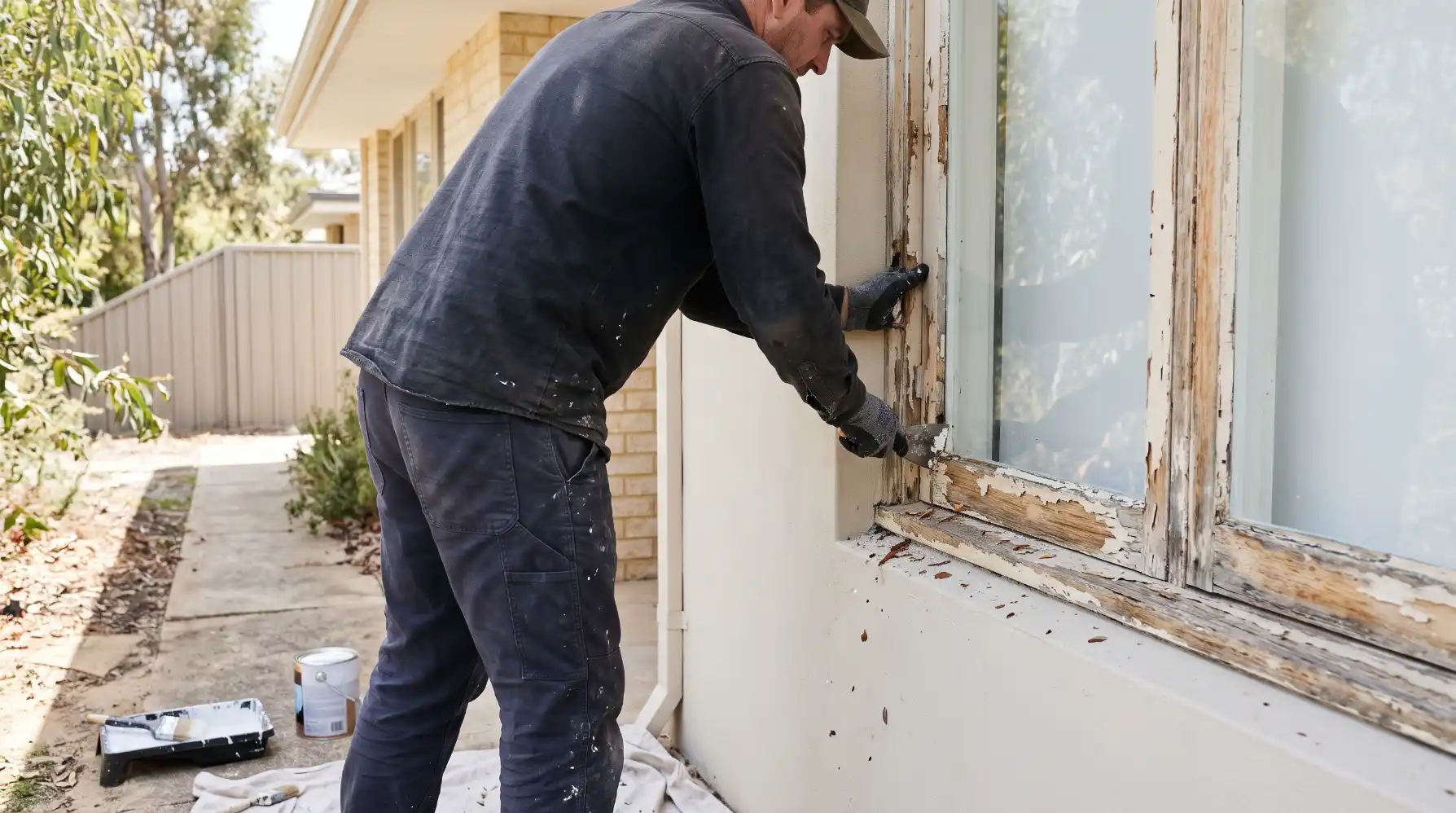
- First locate, then correct the cause. Inspect gutters, downpipes, flashings, and sealants. In the event that moisture is a factor, allow the area to completely dry.
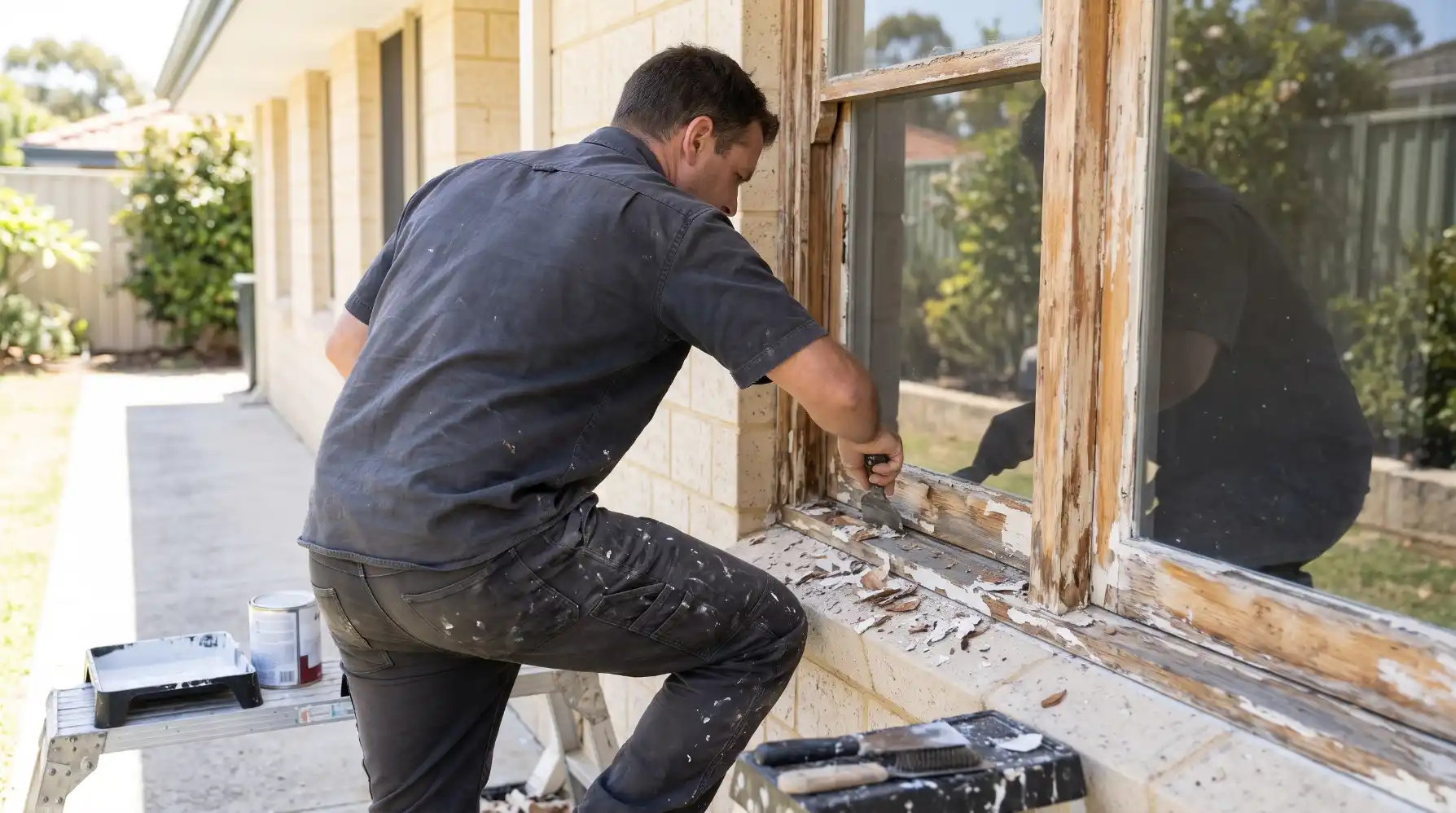
- Scrape back to sound paint. Continue scraping until the edge will no longer lift up. Do not cover up end and edge gaps.
- Sand and clean. Encase with feathers, then scrub away all dust, salt, mould, and chalkiness. Do not repaint until mould is treated.
- Repair the surface. Seal all cracks and holes and remove rotted wood instead of painting it.
- Moisten the bare areas. Apply a surface-appropriate primer (timber, masonry or metal).
- Apply two topcoats. Apply exterior paint of good quality, and do it in shade or mild weather, NOT in the full afternoon sun.
Please be aware, many homes which are built in Australia prior to the 1970s are likely to contain lead-based, or old lead-containing, paint. If there is any doubt about the presence of lead, do not dry sand or remove some of the old paint. Seek guidance before you do so, especially if there are children or women who are pregnant in the home.
Situations that you may need to call a professional are covered.
Patches that are small are easy to deal with. However, if you go out of your way and contact a professional:
- The paint is becoming detached and is recurring over wide areas of the wall. The paint is peeling and/or is recurring throughout significant areas of the wall.
- Suspicion of rising damp, roof leak, or waterproofing failure
- The surface is overhanging or high up / inaccessible for safe access.
- You own a rental apartment and want to repaint it. As a landlord or apartment manager, you have a repainting deadline.
- The house is aged, possibly with lead paint.
A competent painter will use a moisture meter, tap for frizzling, test adherence, and examine the paint history prior to quoting a price. If someone tells you to just paint it over, this is a red flag.
Grant has a collection of common mistakes that should be avoided.
- Overpainting loose paint. This newly launched coat is as firm and strong as the old coat beneath it.
- Without using primer to prepare the bare timber or patched areas. The paint sticks to the surface with the help of the primer.
- Ignoring the leak. Water will still be able to enter if the base coat is repainted.
- Not being at the right time of day. Perth and the heat of the day mean blistering is a possibility.
- Purchasing the lowest-cost paint. Lower quality paints are less colorfast and not as flexible.
- Running multiple strokes to save time. Thick paint cracks more easily than 2 proper coatings of paint.
How Much Does It Cost To Repair Peeling Paint in Perth?
Will vary according to cause and area. As a general rule:
- Major redo (instead of a door, window frame, or small wall section): A few thousand dollars.
- A room needing repairs due to moisture or a complete room needing repairs: a few hundred to a few thousand dollars
- Repainting exterior including proper preparation: typically, several thousand dollars or more for 2-story or larger homes.
The ranges are wide depending on access, surface, and color of paint. You can only quote accurately by doing a site inspection. The initial investment to correct the underlying cause is higher, but less costly than repainting twice.
Frequently Asked Questions
Why is my paint peeling in big sheets?
Large sheets usually mean the paint never bonded properly. Common reasons are painting over dust, grease, or a glossy surface without sanding, applying paint to damp walls, or skipping primer. Moisture behind the wall is also a frequent cause. Scrape back to firm paint, fix the source, and repaint with the right primer.
Can I paint over bubbling paint?
No. Bubbling paint is a sign of trapped moisture or heat, and painting over it just hides the problem. Cut or scrape away the bubbles, find where the moisture is coming from, and let the area dry fully. Then sand, prime, and repaint so the new coat sticks.
How long should exterior paint last in Perth?
A quality exterior paint job in Perth typically lasts around 7 to 10 years, though sun exposure, coastal salt, and the surface all affect this. North and west-facing walls often wear faster. Good preparation matters as much as the paint itself.
Does paint blistering mean I have a leak?
Not always. Paint blistering can come from moisture, but also from painting in direct sun or over a surface that was still damp or dirty. If blisters appear near bathrooms, roofs, or gutters, check for leaks first. If you’re unsure, ask a painter to take a moisture reading.
What’s the best way to fix peeling paint on a wall?
Scrape off all loose paint, sand the edges smooth, and clean the surface. Repair any damage, apply a suitable primer to bare areas, then add two coats of quality paint. If peeling continues, there’s likely a moisture or adhesion issue that needs a professional look.
Fixing Paint Peeling for Good
Not sure what’s behind your paint peeling? City Painters WA is happy to take a look. Request a free quote and get honest advice on what needs doing across Perth, with no pressure.