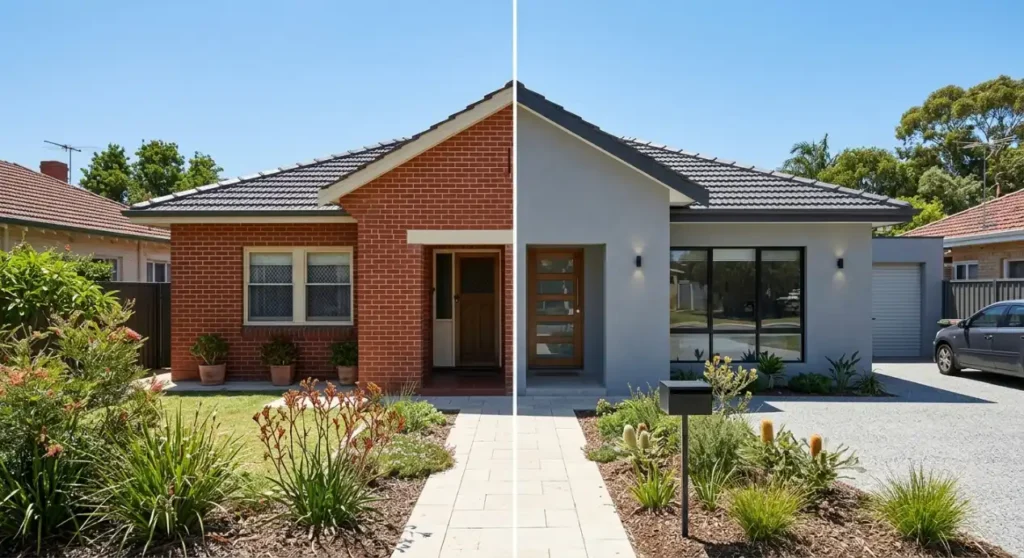
There are two quotes for outdoor work. After some trial and error, one painter proclaims brick is easy. The other states that it is a bigger job. Who’s right?
Both are right, as brick should be quite different to render in color from the street. Paint and moisture eat away at bricks. Hides cracks and hollow areas that can only be seen when the old paint has been removed. If you don’t get it prepared right on either surface, this results in peeling within a couple of summers.
What actually differs is what it means financially and what to consider before selecting up a roller.
Quick answer
- Brick is porous, so it is essential that it has the proper sealer or primer, and if done wrong, it’s difficult to come undone.
- It is smoother, but may have hairline cracks, making repairs and selecting the appropriate render paint crucial.
- New render does need a period to cure before it can be painted. Brick doesn’t.
- In either method, the materials used for the preps determine the length of the finish, always rather than the topcoat.
This is because Brick and Render require different approaches.
Both work with Masonry; they have different properties when painted.
Face brick is formed from fired clay material and available with a rough, absorbent finish and mortar joints between each brick. A cement-based finish is applied to brick or blockwork, floated smooth or textured at the surface finish. It is thinner, flatter, and more prone to cracking due to building movements.
The difference was the basis for all subsequent operations: both washing and pre-treatment and tribogging of the negative later.
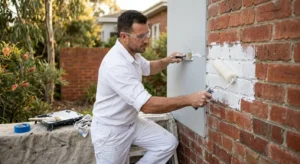
What you should know about painting Brick.
Brick remodeling using a color is increasingly being adopted to modernize old red or brown brick houses, but is not as straightforward as most people think.
Brick is thirsty
Raw brick is a very absorbent surface for paint. If you use the right primer and do not apply the first coat, the resulting hemispherical finish is discontinuous, and you waste paint. Based on this absorption, it is important to have a good masonry primer, which will level out the absorption and therefore allow the topcoats to lay down in the right way.
Salt and efflorescence
The white, powdery material on brick is called efflorescence, and is salt brought to the surface of the brick by the flow of water. Cover this with paint and remove the paint from beneath. A good painter will dry brush or wash it back, determine what the problem is, and allow the wall to dry before applying paint.
When applying brick sealer, it may actually be warranted.
A brick sealer is applied to the very porous, dusty/chalky brick or when desired to lock loose surface material before priming. In some instances, it is not required for a job, but in older brick or weathered brick, it can make the difference between a job that is finished and one that’s not. Inquire with the painter if application of a sealer is needed or just a primer, and why.
Brick is very difficult to paint subtractively.
Problems in restoring painted brick to bare brick are challenging and costly. The paint penetrates the surface and the mortar joints and can cause damage to brick when trying to remove the paint. If in doubt, try a small test patch first, and carefully consider if you’re going to paint a feature wall of character or heritage brick.
Shore stability: Mortar and Brick condition.
Mortar that is crumbling and bricks that are spalling (flaking) should be repointed or replaced prior to painting. A bad patch won’t be soldered together with paint.
How to choose the right paint and methods when dealing with rendered houses.
Newer Perth suburbs and many older suburbs that have been renovated are typical places for rendered homes to be found. The smooth surface is rolling and simpler to spray, but the hassles lie in the details.
These are visible as cracks and hollows.
They show cracks in buildings as a result of settling and in walls due to heating and cooling. In general, cracks that are very thin can be patched with a filling product that is flexible and can last for a long time. Usually, larger cracks, also ones that are “drummy” when tapped, indicate that the render is no longer bonded to the wall behind it.
The correct way to repair renders is to cut away the failed areas of render and repair it by filling the space with the appropriate material and allowing the rendered area to set before painting. You cannot simply paint over a low area and make it look good; it will be obvious after a couple of months.
The renders take time to condition new render.
Newly poured cement render stores moisture and is very alkaline during the curing process. If permitted to arrive at the pit too early, it may peel, blister, discolor, and adhere poorly. Usually, several weeks are required to cure the new render, followed by a primer that is applied to make it alkali-resistant. You should arrange with your painter and/or your renderer when you will remove the scaffolding.
Choosing render paint
Specifically, a good render paint will be 100% acrylic exterior and will be breathable, flexible and UV resistant. Flexibility is important to allow coatings to accommodate some movement without cracking. In your quote, also take into account that textured or ‘sponge’ finish render requires more paint than smooth surface render.
Weighing Brick vs Render: how can you determine which is superior?
Brick Render
Galilee Method of Revealing the Positive Side of a Bug Burial Pit rispetto al terreno poroso o con le macchie o al terreno composto di cemento ingestito che può lasciare una texture
Main material problems: Efflorescence, crumbling or cracking mortar lines/Cracks, old patches that have come off the paint, cured out of the old mortar joints.
This is for the first coat: Masonry sealer or primer; Primer (alkali resistant if new).
Low solubility in paints: High; Moderate
- Ratings such that it is very hard to reverse or easy to repaint
No damage to the car’s surface: Typical; no symptoms appear on the surface like paint or rust for several weeks to grow.
In most cases, inadequate water drainage/salts trapped in crevices. Cracking and delamination of the seats caused by inadequate water drainage and/or trapping of salts in the crevices.
The impact of Perth conditions on both surfaces.
Paint to the taste of Melbourne does not necessarily suit Perth’s tastes. Hot summers, strong UV, and numerous residences that are in the reach of coastal salt air. These, in combination, will dissolve paint more quickly than most will believe.
- Dark colors and lower-quality paint fade with heat and exposure to the sun. Use a UV-resistant acrylic; caution should be used in very dark colors on west-facing walls.
- Near the coast, salt air will harm brick and render. Thoroughly rinse and clean prior to painting to prevent the entrapment of salt.
- Older brick structures may be affected by rising damp and pushing moisture and salt up into the lower walls, particularly due to sandy soils. Properly correct the source of the moisture, or else the base lines of the paint will be blistered.
- Both limestone and Clay Brick are widely used in WA; both react differently. Ask your painter about how they handle limestone; it tends to be more absorbent.
COST AND TIME CONSIDERATIONS
These are only ballpark estimates as costs can vary significantly based on the size of the home, its height, condition, access, etc.
- Painted houses: usually a fairly routine repaint, but increases as cracks are mended, textured surfaces are painted, and double-story entrances are added.
- Brick homes: typically more expensive to build than a similar rendered house, considering that a brick wall requires an extra coat of sealer or primer, extra coats of mortar, and extra detailing around the mortar line.
- Time: Brick will generally require more time to prime and even out, and any repairs to the render will add time between steps of the repairs for curing.
It is the quantity of prep that makes a big difference in the price, not the surface type. The cost of a rendered home is cheaper than brick, and a broken, chalky render is more expensive. Request a written estimate that provides a “special considerations” block to identify the preparation activities, the materials to be applied, and the number of application coats; then you can have a level comparison.
Common pitfalls (things to watch out for)
- Skipping the clean. Paint is prevented from sticking by dirt, mould, salt, and chalk. Pressure washing and correct cleaning are not an option.
- Cleaning up wet or moldy urine spots. As water drains out of the paint, it will bubble and flake.
- The use of incompatible paint. Exterior masonry works will not look the best with an interior or low-grade paint in Perth’s climate.
- Repairing by painting over cracks. New paint appears to cover cracks but, typically, within months, cracks reopen.
- Laying new render too soon.Applying new render prematurely. Wait until it’s cured before using appropriate primers.
- Opting for the lowest quote without paying for prep. When the prep is omitted, it is very likely that the price is low.
Frequently Asked Questions
Can you paint brick?
Yes. Brick can be painted, but it needs proper cleaning, any repairs to mortar, and a suitable masonry primer or sealer first. Keep in mind that painted brick is hard to return to its original look, so it’s worth being sure before you commit.
Do you need to seal brick before painting?
Not always. Sound, lightly absorbent brick may only need a masonry primer. Very porous, dusty, or chalky brick often benefits from a sealer first. A painter should assess the surface and recommend one based on its condition.
How long should I wait to paint a new render?
Typically several weeks, so the cement can cure and the surface can dry. Painting too early can cause blistering and poor adhesion. Check with your renderer and painter, and use an alkali-resistant primer on fresh render.
Is painting brick or render more expensive?
It depends on the condition more than the surface. Brick often costs more because of the extra primer, coats, and detail work. But heavily cracked or textured render can cost as much or more once repairs are included. A detailed written quote will show the difference.
What is the best paint for rendered walls in Perth?
A quality 100% acrylic exterior paint is usually the best choice. It is flexible, breathable, and UV resistant, which suits Perth’s heat and strong sun. Your painter can recommend a specific product based on the render’s age, texture and exposure.
Whether you’re painting brick or refreshing a rendered home, an experienced eye on your walls makes all the difference. The team at City Painters WA is happy to take a look and give you a clear, no pressure quote. Request a free quote, and we’ll talk you through what your home actually needs.