- August 12, 2026
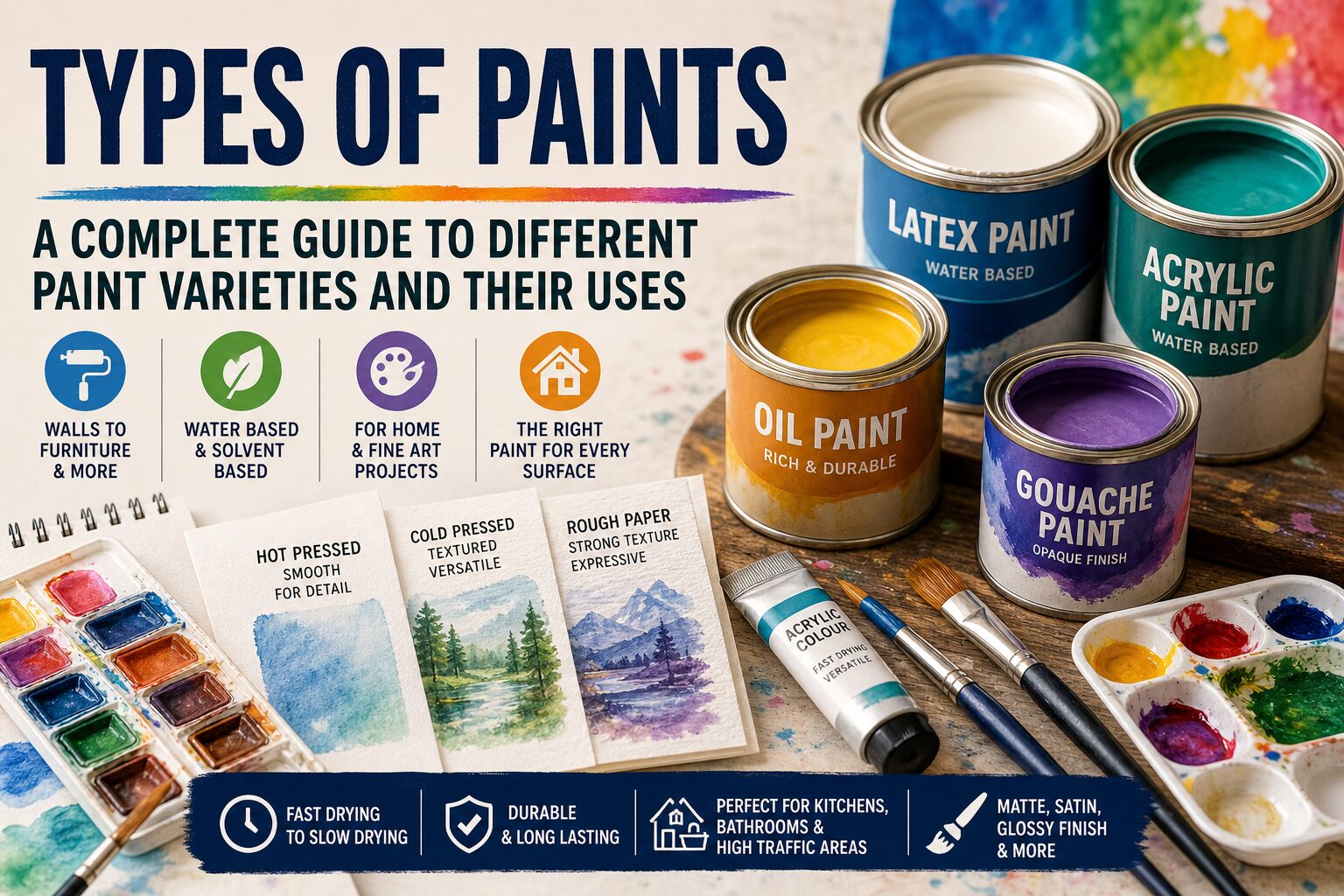
Types of Paints: A Complete Guide to Different Paint Varieties and Their Uses
Choosing the right paint can feel overwhelming with so many options on the market. Whether you’re decorating a room, starting an art project, or restoring furniture, understanding the different paint types available will help you achieve the best results. This guide explores the most common types of paints, their properties, and the surfaces they work best on.
Why Understanding Paint Varieties Matters
Each paint formula is designed for a specific purpose. Some paints dry quickly and resist moisture, while others take longer to dry but offer richer colors and smoother blending. Knowing the materials of painting from binders and pigments to solvents helps you pick a product that suits your project, budget, and skill level.
Water Based Paints
Water based paint uses water as its main solvent, making it easier to clean up, lower in odor, and more environmentally friendly than solvent-based alternatives. These paints have become the standard choice for most household projects.
Latex Paint
Latex paint is the most popular water based paint for interior and exterior walls. It’s durable, fast drying, and easy to apply with a brush, roller, or sprayer. Latex paint flexes with temperature changes, which helps prevent cracking, and it works well in high traffic areas like hallways, living rooms, and family spaces. You can find latex options in matte finish, satin paint, semi-gloss, and gloss finish, depending on the look and durability you need.
Acrylic Paints
Acrylic paints are another type of water based paint, but they contain acrylic polymers that make them more flexible and weather-resistant than standard latex. Artists love acrylics because they dry quickly, layer well, and can mimic both watercolor and oil techniques. For home projects, acrylic paint adheres beautifully to wood, metal, plastic, and canvas, making it incredibly versatile.
Oil Paint
Oil paint uses natural oils usually linseed oil as the binder, giving it a rich, luminous quality that’s hard to match. It produces a smooth, durable finish that’s ideal for trim, doors, cabinets, and detailed artwork.
The trade-off is that oil paint has a slow drying time and takes longer to dry than water-based options, sometimes 24 hours or more between coats. It also requires mineral spirits or turpentine for cleanup and tends to yellow over time. Despite these drawbacks, many professional painters still choose oil paint for surfaces that need a hard, glass-like finish.
Watercolor Paint
Watercolor is a translucent paint made from finely ground pigments suspended in a water-soluble binder, usually gum arabic. It’s prized for its delicate, layered effects and is a favorite among artists, illustrators, and hobbyists.
Watercolors require quality paper to perform well. Cheap paper buckles and tears when wet, while watercolor papers are designed to absorb water without warping. There are two main types: hot pressed cold pressed papers refers to how the sheets are processed hot pressed paper has a smooth surface ideal for fine detail, while cold pressed paper has more texture for expressive brushwork. Rough paper has an even more pronounced tooth and is favored for landscapes and loose, atmospheric work.
For beginners, choosing good watercolor paper makes a huge difference. Papers for beginners are often student-grade and more affordable, but investing in 100% cotton sheets dramatically improves how the paint flows and blends. Techniques like wet on wet where you apply wet paint to an already-wet surface only work properly on quality paper.
Guache Paint
Gouache is sometimes called “opaque watercolor” because it uses similar ingredients but contains more pigment and a chalk-like additive that makes it cover completely. When comparing gouache paint vs watercolor, the biggest difference is opacity: watercolor lets the paper show through, while gouache sits on top with flat, vibrant color. Gouache dries to a matte finish and is popular for illustration, design work, and posters.
Specialty Paint Types
Beyond the major categories, several specialty paints are worth knowing about for specific projects.
Enamel Paint
Enamel is a hard, glossy paint traditionally oil-based, though water-based versions now exist. It’s used for surfaces that need to withstand wear, like appliances, outdoor furniture, and metal fixtures.
Chalk Paint
Chalk paint has a matte, velvety texture that adheres to almost any surface with minimal prep. It’s a favorite for furniture upcycling and shabby-chic finishes. Most chalk paints need to be sealed with wax or polyurethane for durability.
Milk Paint
Made from milk protein (casein), lime, and natural pigments, milk paint is one of the oldest paint formulas in existence. It produces a soft, antique look perfect for vintage-style projects.
Spray Paint
Aerosol spray paint provides quick, even coverage on hard-to-paint surfaces like wicker, metal grates, and intricate carvings. It comes in oil and water based versions with various finishes.
Choosing the Right Finish
Different paint types come in various sheens, and the finish you pick affects both appearance and durability.
A matte finish absorbs light and hides surface imperfections, but it’s harder to clean best for ceilings and low-traffic bedrooms. Satin paint has a soft, pearl-like glow and resists moisture, making it perfect for kitchens and bathrooms, hallways, and kids’ rooms. A gloss finish or glossy finish reflects the most light, is the easiest to wipe down, and works well on doors, trim, and cabinets. The higher the sheen, the more durable the surface tends to be.
Matching Paint Type to Project
Here’s a quick guide to picking the right paint for common projects:
For interior walls in living areas and bedrooms, latex paint with a matte or eggshell finish offers good coverage and easy cleanup. For kitchens and bathrooms, choose a satin or semi-gloss latex that resists moisture and stains. For trim, doors, and cabinets, an acrylic or oil-based paint with a gloss finish gives a smooth, durable surface. For outdoor projects, look for exterior acrylic or oil paints rated for weather exposure. For fine art, watercolors, acrylics, gouache, and oils each offer unique creative possibilities.
Tips for Better Results
Regardless of which paint type you choose, a few habits will improve your results. Always prep the surface properly by cleaning, sanding, and priming when needed. Use quality brushes and rollers cheap tools shed bristles and leave streaks. Respect drying time between coats; rushing leads to peeling and uneven color. And work in good lighting so you can see missed spots and runs before they dry.
Final Thoughts
Understanding the different paint types empowers you to make smarter choices for any project. Water based paint like latex and acrylic paints dominate modern home use thanks to their convenience and low odor, while oil paint still holds its place for premium finishes. For artists, watercolor, gouache, and acrylics each open up different creative paths, and pairing them with the right surface whether that’s quality paper, canvas, or wood is just as important as picking the right paint. If you’re planning a home upgrade, services like House Painting Perth can help ensure professional results. Take time to match the paint variety to your goal, and your finished project will look better and last longer.