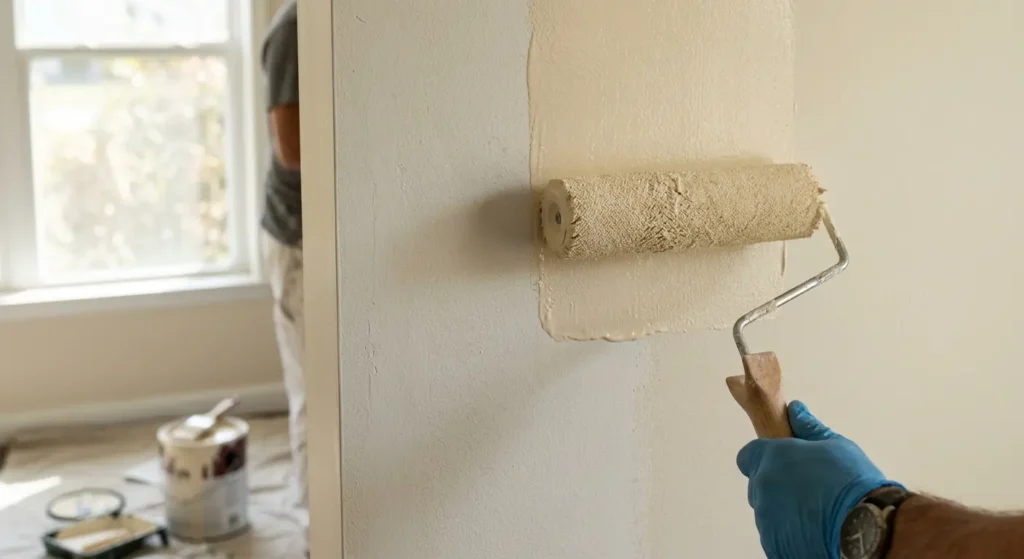
The short answer is this: Even color (let alone proper coverage) and a finish that lasts are accomplished on most walls with two coats of paint. Covering over a darker color, over bare plaster, or switching from a dark to a light color will typically use three coats. Just one application, no matter what the product says on the tin, rarely does it properly cover it, unless you wear it as a uniform.
Here’s the nutshell version. The longer one, because “it depends” is not a cop out.
A tale of the tail that was told to be true until it turned out false.
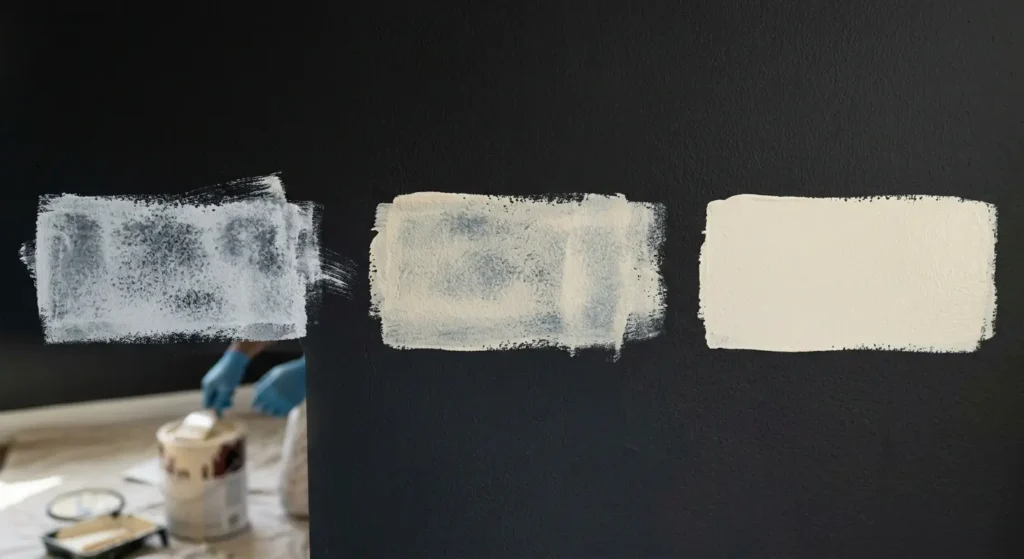
One Canning Vale client contacted us after attempting their own weekend renovation of their living room. She had applied one coat of a mid-range paint over the dark navy color feature wall, and by Sunday evening there were streaks throughout the light, with the navy bleeding through in spots. She thought that she had purchased a defective paint batch. She hadn’t. She had just applied for one when the task actually called for three.
This is one of our most frequent callers! When people say, “one coat is enough,” they are simply assuming that this is true no matter what the color is underneath, the type of paint, or what surface is being maintained. When we arrived, we were immediately able to patch the pinholes and apply the appropriate number of coats with the recommended amounts of drying time between layers, and the room looked as she desired all along. It simply required the proper process, not too much effort.
After all, why is it that you often see people wearing only one coat?
Even the best paint job will only achieve a clean finish, and there will always be the odd patch or light showing through the old paint. This isn’t due to low-quality paint; it’s simply how paint coverage operates. Usually, standard paints take two coats, rather than one, to obtain full opacity and true color. The first coat is enough to properly cover the existing color, while the second coat provides you with the same color as the label, not a washed-out version.
Sometimes, to save time or paint, the second coat is avoided, which eventually means double the cost; around the “drawdown,” you will need to repaint early, and the thin paint will be unevenly applied.
The true answer to how many coats you need is determined by how one defines a “coat” for your pet and how often a coat is done.
The rules don’t apply to all walls; you have to experiment to find what works for you. Several factors determine this:
The color you’re covering over, dark/ saturated colours (navy, charcoal, deep red) typically require an additional coat versus painting over a light neutral color.
Very light or bright colors (white, pale yellow, or soft pastels) reveal color inconsistencies very clearly and usually require a third coat for a good, even color.
The standard of the paint: good-quality paint is superiorly pigmented and will indeed cover better and faster with fewer coats. Budget paints may require an additional coat to get the same quality.
The surface itself, whether it is bare plaster, new render, or patched drywall, is more porous and absorptive, which is likely to require an additional coat, even if the paint you choose is an appropriate color.
Brush and roller inconsistencies are obvious in the lighting in the room, particularly natural light, such as direct sunlight. Big window rooms often require the additional layer simply to appear just right during daylight hours.
Discovering what the painting over dark colors means
This is what most people are slammed with. The one task where an omission of a coat almost always reveals itself is painting over dark colors, particularly when changing from a dark charcoal color to a lighter color. Dark pigments don’t fade with just one coat of paint, even with good quality paint.
There’s no magic formula for fixing it, only patience to go through two coats of your new color, with the proper drying time between coats, of course, and the stain-blocking primer preparation. One of the most frequent shortcuts and causes of a “three-coat job” turning out patchy after three coats is haste in the second coat before the first is dry. It’s not how much paint you put on; it’s about putting the paint in the right order, with the right gaps between the paint.
Here are a few tips to help you paint more efficiently:
It’s possible you could do this on your own before you call in reinforcements; if you are, a few things help make it easier:
Make sure that each coat dries before you re-coat (check the pack tin for re-coat time, and avoid hastening processes in damp weather).
If you are using different colors, particularly dark to light, use a good or expensive color change primer.
Avoid applying too much of the roller; thin and even coats will dry faster.
If you’re not sure of the number of coats it will need to achieve a color change, test a small patch first.
Proper working lighting will aid in the ability to identify any spots in the paint before the paint is completely dry, and not after you have completed the job.
The pointers on why to call in-house painters near me in Perth. Here are the reasons to call in-house painters near me in Perth.
For small, simple projects, DIY is OK. However, if there is an extensive amount of room to fill, dark-to-light color changes, or an intricate trim job and/or ceiling height, an experienced local team takes the guesswork out of the equation and the redo. We’ve done just as many jobs as can be counted across Perth homes, and we know just what number of coats is required for a job, not the number we guess it would need.
FAQs
How many coats of paint do I need for a feature wall?
Two coats minimum for most colors. If you’re painting a dark feature color over a light wall, plan for three.
Does paint coverage change between brands?
Yes. Premium paints generally have better pigment density and cover more evenly in fewer coats than budget options, which can make the extra cost worth it over time.
Can I paint a second coat the same day?
Usually yes, if the first coat is fully dry. Check the recoat time on the tin, as this varies by paint type and humidity levels on the day.
Is primer really necessary, or can I skip it?
For most jobs, skipping primer just means you’ll need an extra coat of paint to get the same coverage, so it often costs more in paint than the primer would have.
How do I know if a room needs three coats instead of two?
If you’re changing color families (dark to light, or a strong color to a neutral), or painting a porous surface like new plaster, plan for three coats from the start rather than deciding halfway through.
Not sure how many coats your job actually needs?
Get in touch with City Painters WA for a free, no-obligation quote; we’ll tell you exactly what it’ll take to get it right the first time.