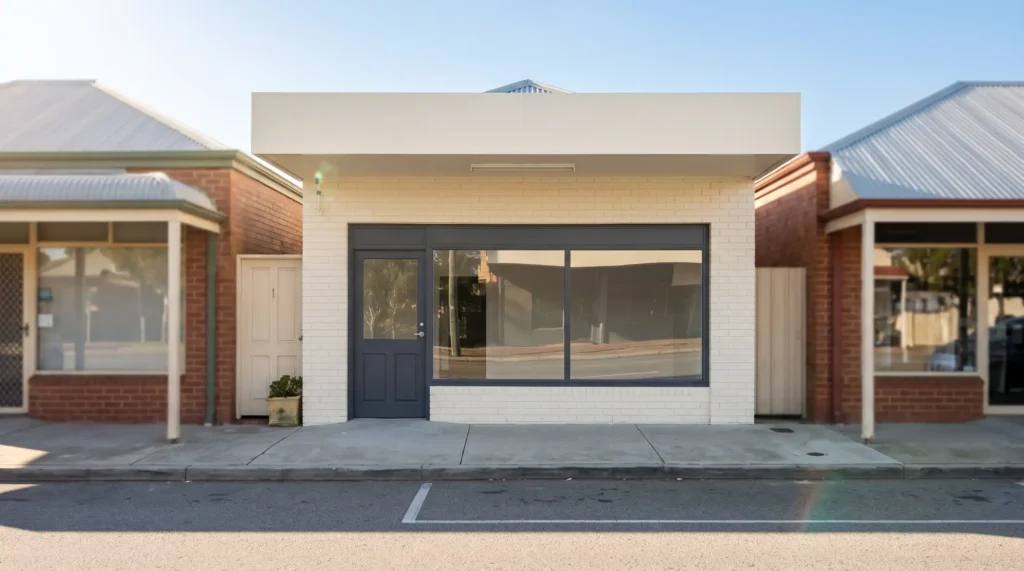
Before people even read a price tag, they’ll make their decisions about your shop based on what they see on the sidewalk. After a few seconds, they make their decision from the footpath. Yellowed paint, a worn-down sign, or the frontage of a store that is camouflaged into the adjoining store sends them bypassing it high and dry.
That can be fixed by some good signage for the storefront and a nice paint job. However, in Perth’s heat and salty air, a poor standard of work (cheap or rushed) may appear worn after a couple of summers. No need to fork out a lot of cash. There are a few intelligent choices to make, in the correct sequence.
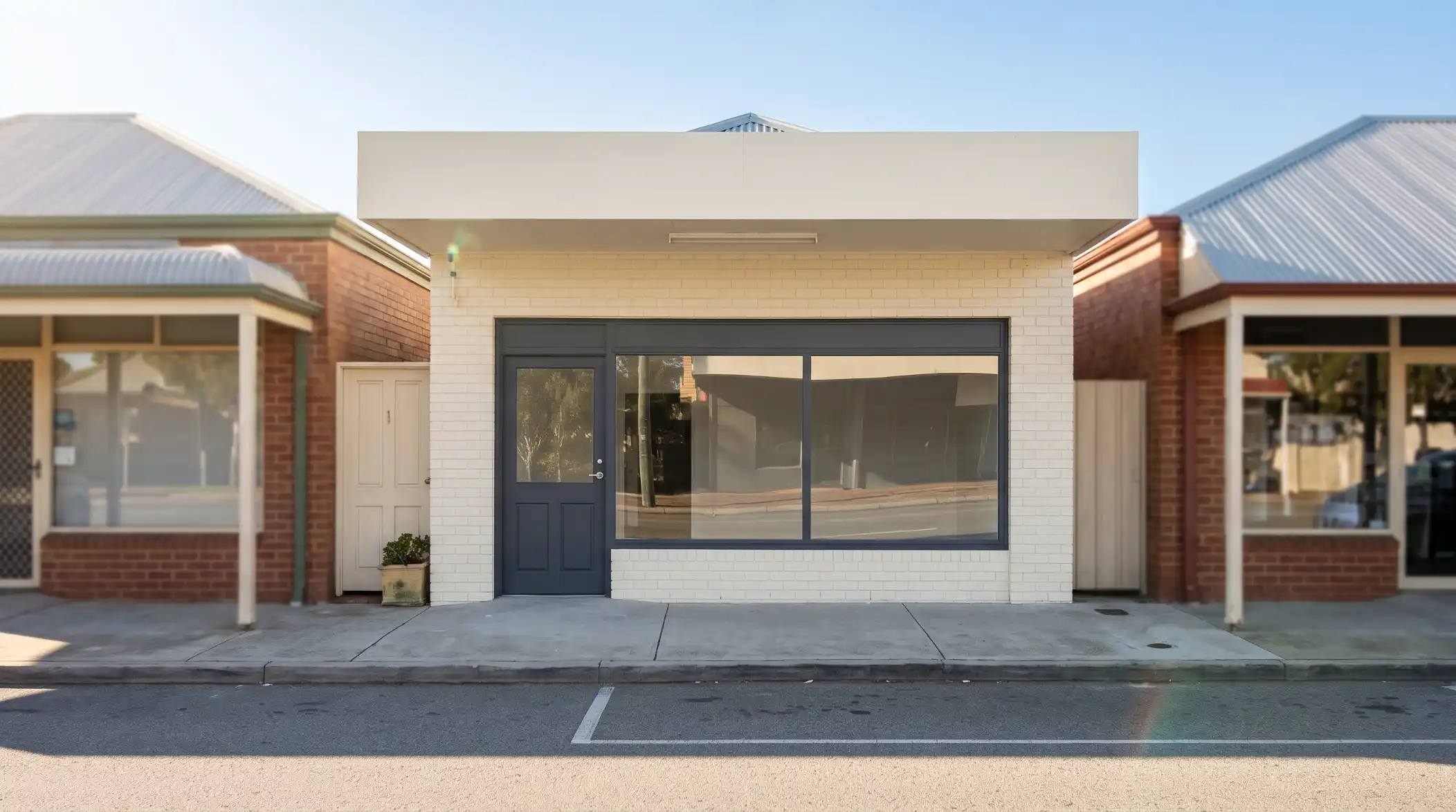
Here’s what we look for when a business comes to us for work, and what we say to our neighbor to give them tips.
Quick answer
- Colors: Use two or three colors, and ensure the background is a contrasting color to the lettering.
- Shop front signage: Order only simple, easy-to-read signage, and get council and landlord approval.
- Paint: Exterior: Use a high-quality exterior system appropriate to the surface. How long it lasts is based on how well it’s prepared.
- Timing: Make a schedule of the painting and signage to ensure they don’t negatively impact each other.
Here are some reasons why your store frontage does more selling than you realize:
Your front store is the first impression customers make, and one person often base their assessments on. It also implies a business that cares for its customers when it presents a clean and fresh entrance. Reveal otherwise, whether fair or not, through peeling paint or a cracked sign.
Foot and car traffic pass through; it’s free publicity. That traffic can turn to curiosity via the power of paint and shopfront signage.
Choosing Shopfront Colors That Work
Use the brand colors, then consider a practical question: what will this be if you’re 20 meters away, in harsh afternoon sun?
Trends are not a prerequisite for contrast.
Two colors that are equally middle grey do NOT look like text written nicely on the paper, even when reading into a video’s dark areas. With high lighting, pale text on a pale background is hard to see. You should decide on your colors in conjunction with your shopfront signage.
Look at Your Street
Go out of the way by the other stores. A deep green or charcoal color stands out against a background of beige and grey. A white and one accent color can achieve the same effect as a white and a bold, busy one on a busy street. Colors for heritage precincts may be determined in the precincts as well; please check.
Provide space for Perth’s sun.
Dark colors are prone to fading more quickly when subjected to strong UV, such as the North and West wall surfaces. Typically, the problem is a pair of deep reds and blues. A dark fronted model may be better suited to the younger driver, whereas a lighter base and dark accents may seem more appropriate to someone who would like to enjoy a timeless classic.
Color approach: Works well for. Watch out for
Most Retail, cafés, offices. Neutral base accented with bold accents (one on doors, trims, or a feature panel)
Traditional/smart, high-quality, hotel-like positioning. Acceleration, wear and tear, and dust/salt marks in the charcoal/black color tone are observed.
Faster fading, can look cheap if used to a high degree, and/or bright and saturated colors.
Warm greys and soft whites. Medical, beauty, and professional services can appear flat when not suitably signposted and lit.
Educational or shopping signs that are actually read.
Paint adds color to the scene. People know what you do from your shopfront signage. Most issues are too much text, small lettering and low contrast, and signs that clash with the paint.
- Keep it short. At most, add an additional line to include the business name, what you do, and maybe an additional line.
- Adjust the size for distance. Mount a mock-up on the wall and view it from the opposite side of the road.
- Use contrast. Dark on dark or light on light, MESSED ON MESSED.
- Think about night. Glossy lettering often reflects or glints the lighting.
- Choose paint or choose paint together with the sign. It is more difficult to match a sign to the completed wall than it is to complete the wall to the sign.
Painted vs Fitted Signs
Simple names are accompanied by painted signage on the wall or fascia and are cheaper. Lightboxes, raised characters, etc. provide depth and require fixing points, but do so. We don’t like getting it dirty, so fresh paint is nice to our sign writers. It’s not uncommon to see outlines of older signs when painting around them.
Check Approvals First
Local councils will normally also have controls on the size, location and light level of signs and may have additional regulations in heritage areas. Leasing will also require approval from the landlord. When you need to get shopfront signage, do so before rather than after you sort this out.
Experts advise you to take out time and invest effort in preparing and painting your store frontage.
It is all about preparation where the money is made. Making up a bad foundation with a neat finish can peel in just a year or two.
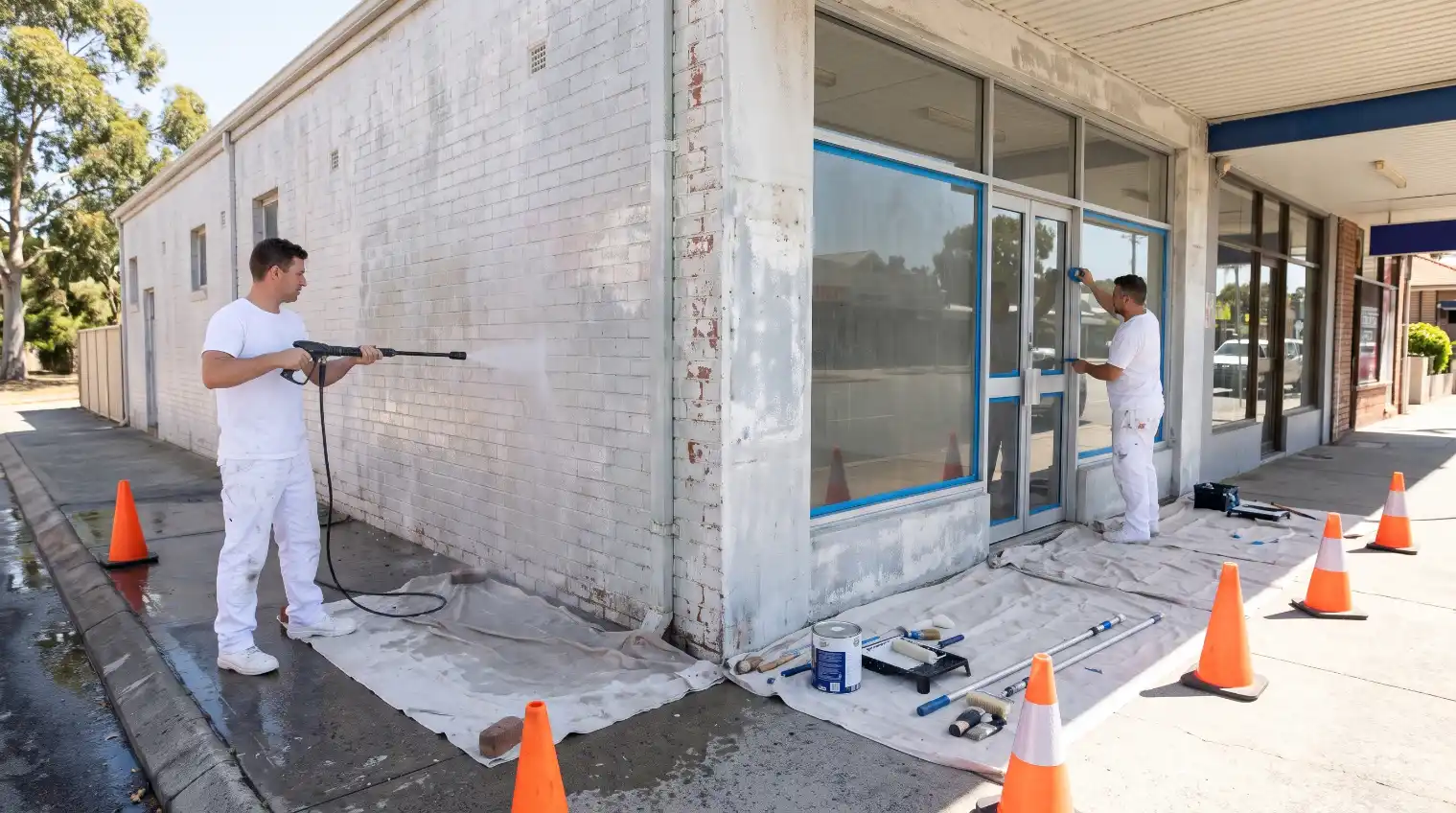
On a shopfront, we typically check:
- The surface type. Each of the materials used for bricks, rendered brick, tilt-up concrete, Colorbond, aluminum framing and timber requires a different type of primer.
- Salt and chalking. New paint is not adhered to by salt air and chalky old paint. Surfaces must be adequately washed, and frequently a binding primer is applied.
- Moisture and efflorescence. Moisture is a problem when there are powdery white spots that show on brick or render. If this occurs, the new paint will peel.
- Dust and grit. The sandy coastal soils of Perth laid quite a bit of sand on lower walls. Must be removed prior to painting.
- Aluminum and glass. Shopfront framing requires the proper primer for the adhesive used, as well as strict masking and careful attention.
- The weather. Paint can dry prematurely during the summer. Painters plan around the temperature & sunlight of the day.
A good commercial painter Perth enterprise is also scheduled for your working hours. Typically this involves late-afternoon or overnight shifts, a clean job location, and a straight line for customers.
Common mistakes to avoid:
- Selecting colors within a tiny tint booth.Selecting colors in an interior color test. Test on a real wall and test a.m. and p.m.
- Communicating before paint colors have been finalized.
- Not even preparing for a process in order to save time and money.
- Applying interior or budget paint to the exterior wall.
- Covering up mould or damp without action taken.
- Abandoning council approval, landlord and strata approval.
- Sowing seed in the nuns’ lap and losing some of the trading days.
How much does it run? How long does it take?
It depends on the showroom, and your speculators will be wrong if they don’t look at it. Generally, a small single frontage shop will be in the low to mid thousands, and multi-level and larger frontages will be more expensive. It will take days to install a small frontage under favorable expected weather, if not unfavorable.
Factor: Why it affects the price
Size and height can make a significant contribution to the cost; scaffolding or a lift may be required.
Adequate surface preparation, rust treatment, and sealing add to the time. Surface preparation and rust treatment/ sealing add time.
The type of surface: Brick and render walls take up more paint than smooth metal.
Color change from dark to light: typically requires additional layers of color
If you take on hours, you may end up paying more! Working at night/on a weekend may cost more!
Hiring Painting Contractors in Perth: Things to Take into Account
Positive qualities include holding a written scope, fixed price, a license and insurance, workmanship warranty, etc., and a named paint system along with photos of similar commercial work. It’s also a good idea if they’ll work with your signwriter to coordinate.
Red flags: If only one line of dialogue was given and said something like, “one coat will do it,” or there is no mention of preparation, there is too much pressure to sign right there, or there is no proof of insurance. Quality exterior painting Perth contractors will be glad to talk to you about what they are doing and why.
Frequently Asked Questions
How much does it cost to paint a shopfront?
Costs vary with size, access, surface condition and the paint system used. A small single frontage shop typically costs a few thousand dollars, while larger or multi-level frontages cost more. Scaffolding, repairs and signage removal add to the total. An itemized written quote is the only reliable figure.
Do I need approval to change my shopfront signage?
Often, yes. Local councils commonly regulate signage size, position and lighting, and heritage areas can have extra rules. Repainting in existing colors is usually simpler than installing new signs. Check with your council, and your landlord or strata, before you commit to anything.
What is the best paint for a shopfront?
A premium exterior acrylic suited to the surface is typically the best choice. It copes with UV, heat and salt air better than interior or budget paints. Brick, render and metal each need the right primer, so ask your painter which system they’ll use and why.
How often should a shopfront be repainted?
A quality job typically lasts around 7 to 10 years, but strong UV and coastal exposure can shorten that, especially on sun-facing walls and dark colours. Chalking, fading, flaking paint and stained render are signs it’s time.
What colors attract customers to a shop?
No single color works for every business. Choose two or three colors that suit your brand, contrast clearly with your sign lettering, and stand out from neighboring shops without clashing. Clean, well-kept paint in any colour beats a trendy colour in poor condition.
If you’re planning to refresh your shopfront signage and paint, City Painters WA is happy to take a look, talk through colors and give you a free, no-obligation written quote.